The Economics of Gifting: What Is a Gift Order Actually Worth?
What is gifting actually worth to your brand? We unpack August (2026) Giftnote data to explore gifted AOV, new customer acquisition, recipient value and what the numbers mean heading into peak.
Most ecommerce teams can tell you their AOV, acquisition costs and repeat purchase rate.
But ask how much of their revenue comes from gifting, what those customers are worth, or what happens after the gift is delivered, and the picture gets less clear.
Across Giftnote brands in August 2026, 19,811 gift orders generated $2.76M in gifted revenue.
But the value of gifting isn't necessarily limited to the initial transaction.
The August data gives us a useful look at the different ways gifting creates value for ecommerce brands.
Start with the gift order itself
Across Giftnote brands, blended gifted AOV was reported at $152.19 in August.
What we can see clearly is that gift order values vary significantly by category:
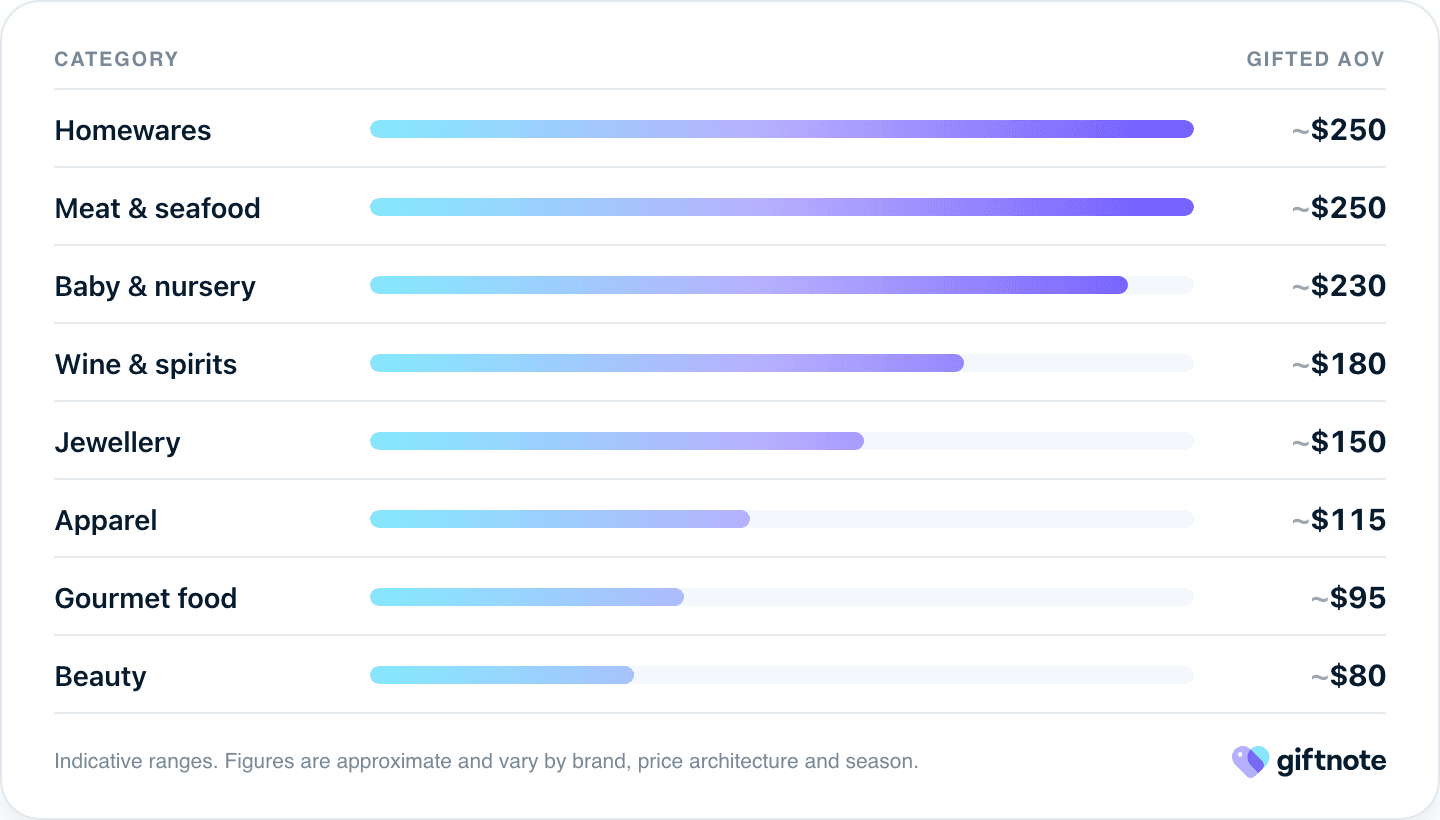
There isn't one universal value of a gift order. The economics depend on what you sell and how customers gift within your category.
For homewares and meat & seafood, gifted AOV sat around $250. For beauty, it was closer to $80.
Understanding those differences gives brands a much clearer picture of the size and shape of their gifting opportunity heading into peak.
Then look at who's placing the order
10,472 gifts in August came from someone purchasing from that brand for the first time. That's 53%.
That matters because gifting isn't only generating revenue from existing customers.
Gifting isn't only a purchase occasion for existing customers. It can also bring new buyers to a brand when they're shopping for someone else.
That means the gift order can represent more than revenue. It can also be a new buyer's first transaction with your brand.
The value doesn't stop with the gifter
Then there's the person on the other side of the gift.
In August, 11,946 gifts created a warm recipient lead.
These are recipients who have already had a product from the brand put in their hands through someone they know.
Of those recipients, 1,034 had subsequently purchased for themselves, with a $165.30 AOV, accounting for $170,920 in subsequent orders.
That means the economics of gifting can extend beyond the original transaction:
Gifter → Gift order → Recipient → Direct customer
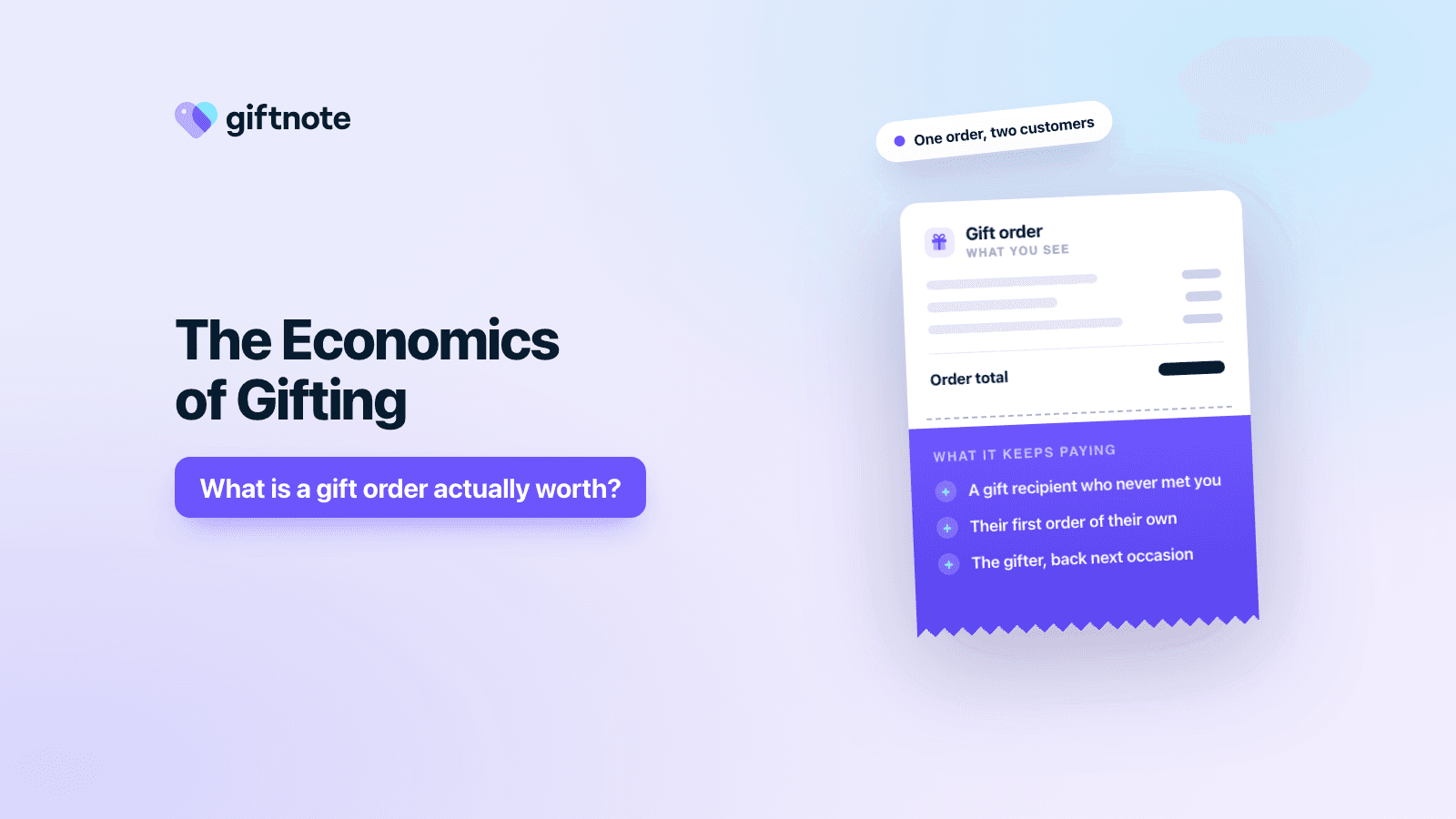
One gift order has the potential to create two customer relationships: one with the person buying and another with the person receiving.
That's what makes gifting fundamentally different from a standard ecommerce transaction.
Gift buyers are planning ahead
There's one more number worth paying attention to as Q4 approaches.
87% of gifts in August were scheduled for a future date.
That suggests scheduled gifting is an important part of how customers use Giftnote, and reinforces the value of having the gifting experience ready before peak demand arrives.
By the time major gifting occasions arrive, some customers have already started planning what they'll send and when it should arrive.
That's why peak gifting preparation needs to happen before peak itself. Your gifting experience needs to be live, visible and tested when customers start looking to gift.
So, what is gifting actually worth to your brand?
Looking only at the number of gift orders doesn't tell you the whole story.
A more complete picture means understanding:
- Gifted revenue and AOV
- How many gifters are first-time buyers
- How many recipient leads you're creating
- Whether recipients go on to purchase
- Which products and categories drive gifting
- When gifts are being scheduled
Together, those numbers start to show the economics of gifting.
For ecommerce brands heading into peak, that's the bigger opportunity: understanding gifting not simply as functionality at checkout, but as something that can be measured across the buyer, the order and the recipient.
Because gifting isn't just a checkout feature. It's a revenue channel. And like any revenue channel, you should know what it's worth.
See what gifting could be worth to your store: run a free Gift Audit. It scans your past orders for gifts, including the ones sent without a gift message, and shows how gift orders compare with the rest of your orders.