Peak Gifting Starts Before Peak
Why the best Shopify brands set up their gifting experience before holiday traffic arrives
Peak season doesn't reward the brands that move fastest. It rewards the brands that prepared earliest.
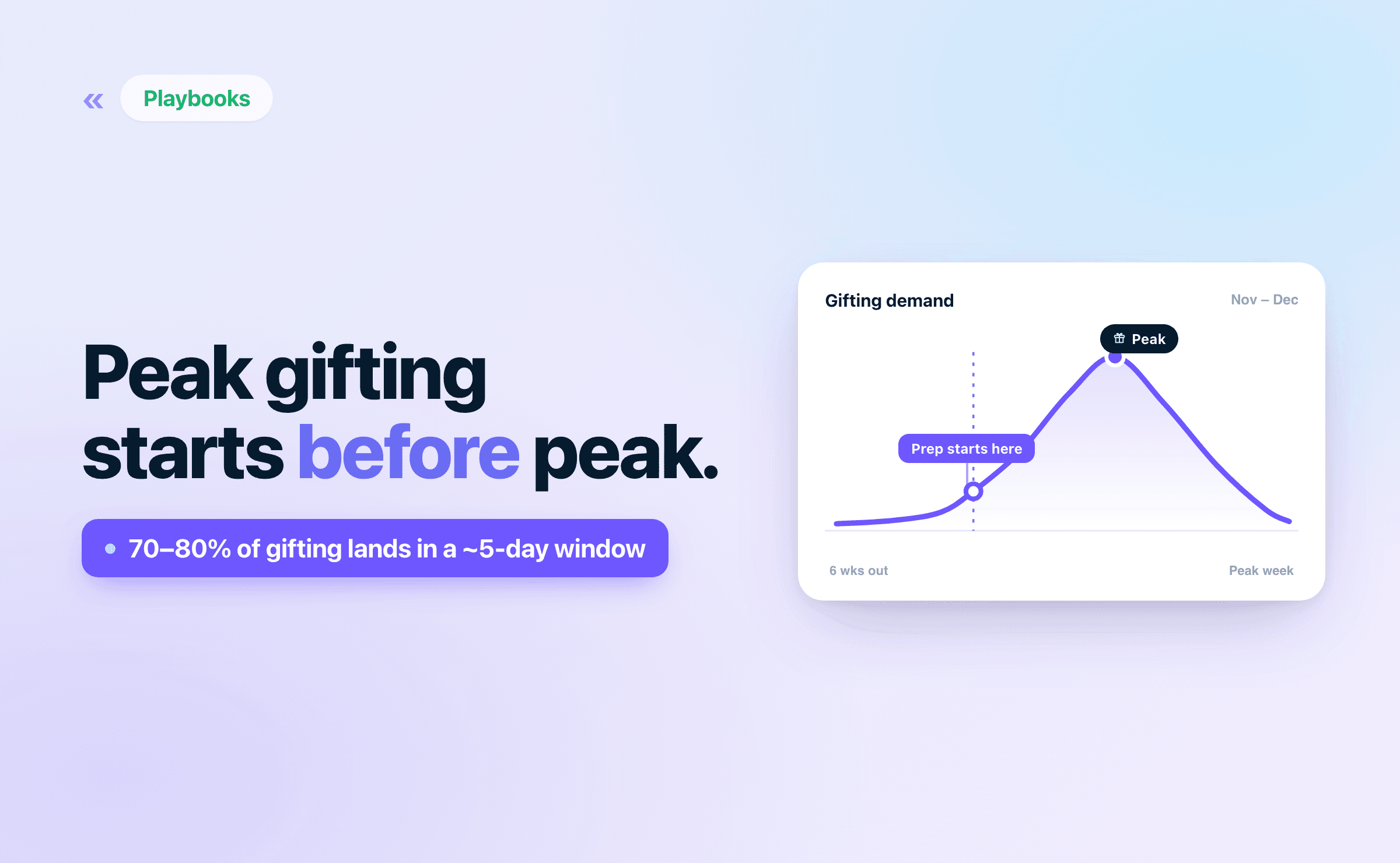
Around 70–80% of gifting volume lands in a narrow window around each major gifting occasion. Once that window opens, you're no longer building your gifting experience, you're relying on it.
Gift messaging, gift cards, recipient journeys and post-purchase flows all need to be working before the traffic arrives.
That's the risk of treating gifting as a December project.
The National Retail Federation found 63% of shoppers wait until Thanksgiving weekend to do most of their holiday shopping.
Info
On Giftnote alone, merchants sent 69,428 gifts in December 2025, about a quarter of all gifts sent in the last 12 months.
If something in your gifting journey isn't working, peak is a bad time to discover it.
The brands that perform best don't wait for gifting demand to spike. They arrive at peak with their experience live, tested and optimised.
This guide covers what to check before the holiday rush, and how to get more value from every gift order once demand arrives.
Gifting is a revenue channel, not a checkout add-on
Getting gifting live is only the first step.
The bigger opportunity is what happens around and after the gift order.
Every gift creates two customer relationships: the person buying today and the recipient who could become tomorrow's customer.
According to Giftnote platform data, gift orders generate an average order value around 25% higher than standard purchases. And every gift introduces your brand to someone through a recommendation from a person they already trust.
That's what makes gifting more than a checkout feature. Done properly, it becomes a measurable revenue and acquisition channel.
A strong gifting experience should do three things:
- Make gifting effortless for the gifter.
- Create a memorable experience for the recipient.
- Turn anonymous recipients into known customers you can re-engage.
Pro Tip
The opportunity isn't simply having gifting enabled. It's making sure the entire journey is working.
Most stores are live. Very few are ready.
Turning gifting on isn't the same as setting it up.
The biggest revenue leaks often happen after merchants think they're finished. One dessert brand converted just 1.4% of more than 3,000 gift recipients because its email templates had quietly stopped sending. Another captured zero recipient opt-ins because its signup experience gave recipients no reason to engage.
Both stores had gifting enabled. Neither had a complete gifting journey.
The three biggest gaps we see are remarkably consistent.
1. Native gift cards leave recipients invisible
Native Shopify gift cards typically send the code to the purchaser, not the recipient.
If that email gets forgotten, buried or forwarded days later, the recipient relationship never begins. And the problem is bigger than it might seem: 43% of Americans currently hold unused gift cards, representing billions in unredeemed value.
Recipient-direct delivery changes that.
Giftnote sends the gift card and personalised message directly to the recipient, identifies who received it and can remind them to redeem before it's forgotten.
2. Gift messages should start a relationship
A gift message shouldn't disappear inside the box.
With recipient-direct messaging, the recipient can receive their personalised message digitally as the gift is on its way — introducing your brand before the parcel even arrives.
More importantly, it can turn an anonymous delivery address into a known, opted-in recipient you can continue engaging.
That's where gifting starts becoming an acquisition channel.
3. Timing matters as much as the message
Sending a gift notification at checkout might work for the purchaser. For the recipient, delivery-triggered messaging creates a much better experience.
They know a gift is arriving, perishable items are less likely to be left outside, signature-required deliveries are easier to manage, and the whole experience feels more intentional.
These might seem like small improvements. Across thousands of peak-season gifts, they add up quickly.
Why recipient acquisition matters
The biggest opportunity in gifting isn't today's order.
It's tomorrow's customer.
A gift recipient has already been introduced to your brand by someone they trust. That's a powerful starting point for a new customer relationship.
Across Giftnote merchants, about 1 in 10 gift recipients goes on to buy. Holiday gifts do better: gifts sent in November and December 2025 saw 17–19% of recipients go on to buy, about twice the rest of the year.

Most brands never see that opportunity because they never identify the recipient in the first place.
Every gift can create two moments of value:
Today's purchase → Tomorrow's customer.
Most stores only measure the first.
Your peak season gifting checklist
Before your peak-season campaign goes live:
✅ Enable recipient-direct gift messaging.
✅ Upgrade native gift cards so they're delivered directly to recipients with redemption reminders.
✅ Trigger gift notifications when orders are fulfilled or delivered, not at checkout.
✅ Capture recipient opt-ins inside your marketing platform.
✅ Test every gifting flow before traffic increases.
✅ If you handle corporate or bulk gifting, launch a Multi-Gift portal before December, not during it.
Completing this work in September or October gives you time to optimise before the busiest shopping period of the year.
Once peak begins, you're no longer building your gifting experience. You're relying on it.
See what gifting could be worth to your store: run a free Gift Audit on last year's holiday orders. It scans past orders for gifts, including the ones that went out without a gift message, and shows how your gift orders compare with the rest.